

|
|
| Draigo is interested in experimenting with design, and it’s relationship to people and the environment. Many of Draigo’s ideas are developed from the bottom up. This means a continuous source of the waste material is sourced [a waste stream] and then a design is developed around it. |
| All Draigo designs consider the environmental impact and embodied energy in their making, use and eventual recycling/reuse. Draigo’s less is more approach to the design means that often less material is used in the first place and the making/manufacturing process may also be more efficient, thus saving time and energy. It also often creates a more ‘minimal’ style of design, which is a preferred Draigo look. |
| Draigo has been keen to share it's enthusiasm for sustainability and creativity through educational programs and workshops, helping young people foster their own practical creativity and looking at waste as a potential resource rather than just an end. |
 |
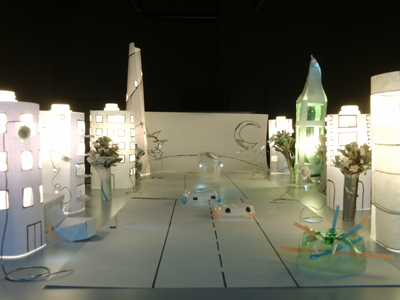 |
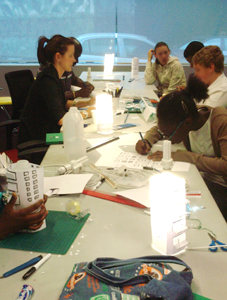
| An 'ignite' workshop building a low energy light city from plastic bottles. The lights were created from scratch, giving the young people some basic electrical wiring skills. |
 |
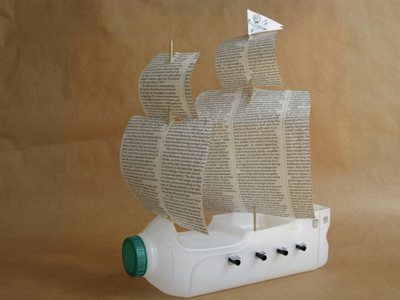 |
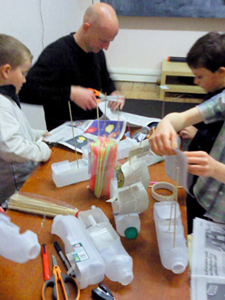
| A workshop to build a pirate ship out of a plastic milk bottle. This was part of a 'skillshare' event, where people freely share some of their practical and creative skills with others |
 |
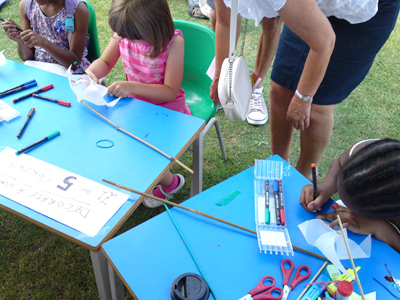 |
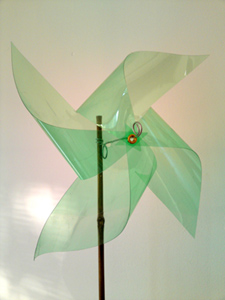
| Windmills made from clear and opaque plastic bottles being decorated with marker pens. |
| Draigo has exhibited work at many places including 100% design, as well as being featured in many publications including the eco-design handbook. |
 |
 |
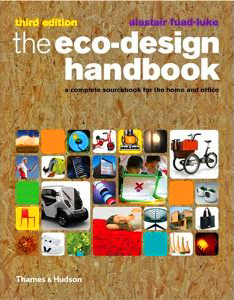 |
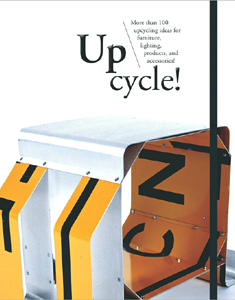
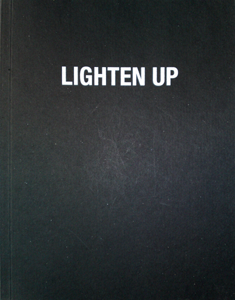
| 'Upcycle' examples of creative reuse. | 'Lighten Up' eco friendly lighting. | Eco-design, a product sourcebook |
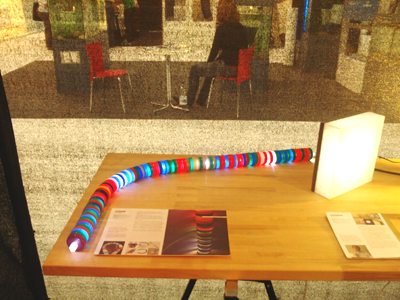 |
| Gloworm on show at 100% Design |
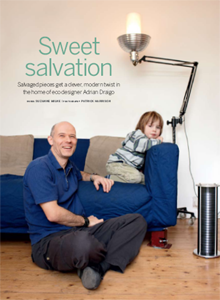 |
| Magazine article about Adrian Draigo |